



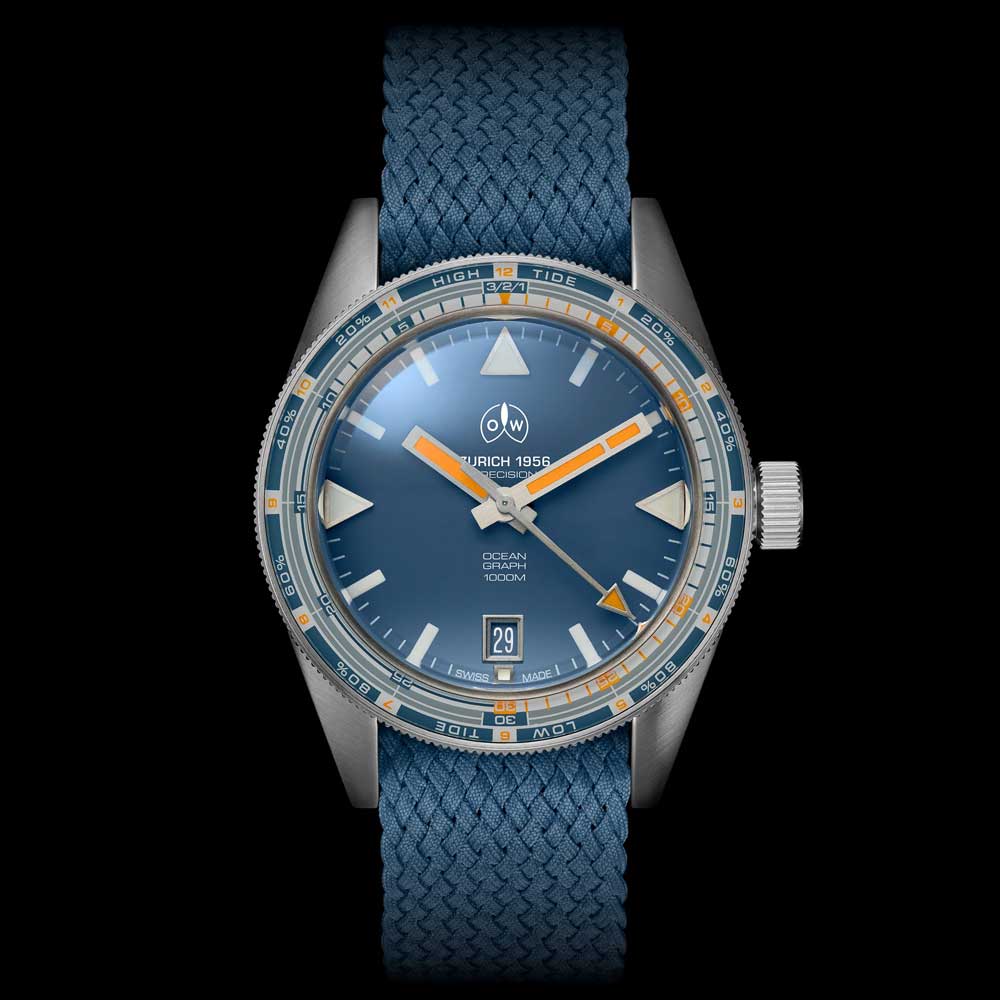
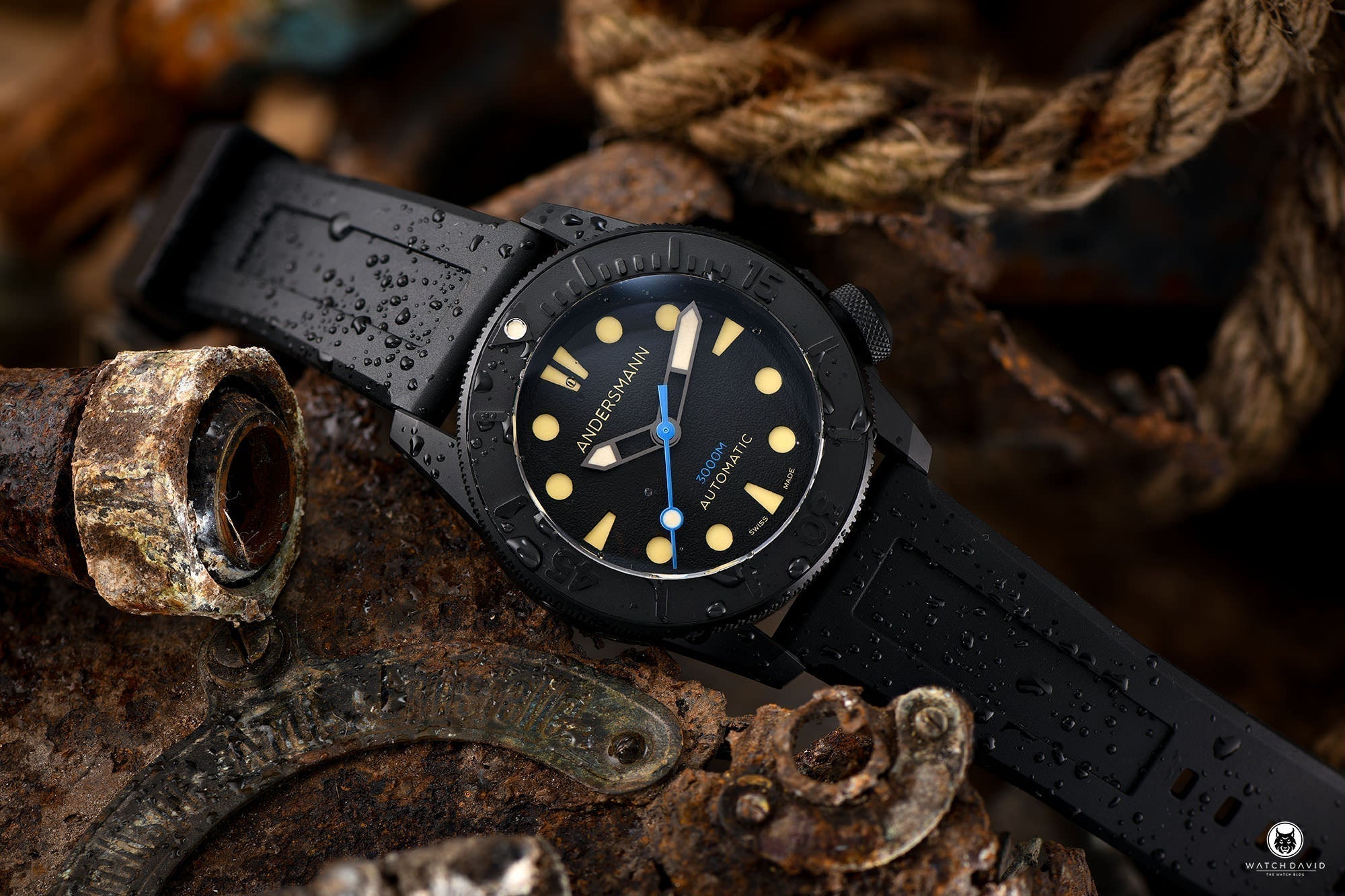
There are many watches that look like dive watches. Robust bezels, large indices, plenty of luminous material, a sporty appearance. But not every watch with a diver look is automatically a real dive watch.
This is where the difference, often overlooked in the watch world, begins. Because true dive watches are not just sporty wristwatches with rotating bezels. They follow a clear functional idea: readability, safety, robustness, and reliability under conditions where design alone is no longer enough.
In this article, I will show you how to truly recognize real dive watches, what distinguishes them from mere diver-inspired watches, and why this topic is more important to many buyers than it initially sounds.

What many confuse with a dive watch
The market is full of watches that at first glance appear to be classic diver watches. This is logical, as the look works. A dive watch exudes robustness, looks sporty, masculine, technical, and at the same time surprisingly versatile. This is precisely why many brands adopt this design language.
The problem begins when pure aesthetics are confused with true function. A watch can look like a dive watch without actually being made for it. It might have a bezel, 200 meters of water resistance, and strong luminous markers – but it's in the details that you see whether only style is being sold or if a truly well-designed dive watch is on the wrist.
What defines real dive watches
Real dive watches are tools. Even if they are worn more often in the office, in the car, or on a walk than underwater today. Their form originally followed a clear function – and this is still evident in good models today.
In my opinion, real dive watches can be recognized primarily by these points:
1. Clear readability
A real dive watch must be functional at a glance. Large hands, strong contrasts, clearly distinguishable indices, and luminous material that not only looks good but is genuinely useful. Underwater, in poor visibility, or simply in everyday life, immediate orientation counts – not decorative overload.
2. A functional bezel
The bezel on a real dive watch is not an adornment but a tool. It must be easy to grip, logically operable, and clearly scaled. Above all, it must feel as if it was intentionally designed for use – not just as an optical nod to classic diver watches.
3. Robust construction
A real dive watch conveys substance. The case, crown, case back, lugs, and clasp must all fit together. It's not just about technical specifications, but about the feeling that this watch was built for stress. Good dive watches do not appear delicate, but resilient.
4. Thoughtful operability
Especially with tool watches, you quickly notice whether a watch was developed by people who understood what they were building. Is the crown easy to grip? Is the bezel precisely seated? Are the hands and minute track sensibly aligned? Does the watch feel logical under real conditions? These are precisely the things that separate real dive watches from mere design play.
5. Character instead of mere optics
Many real dive watches carry their origin within them. You can feel that they weren't just created because diver watches sell well, but because there's a story, an idea, or a clear technical stance behind them. That's why many smaller brands in this segment are often more exciting than interchangeable mass-produced items.

Does a real dive watch have to be ISO certified?
This is where it gets interesting. If you look at the topic strictly technically, you quickly arrive at the ISO 6425 standard. It defines requirements and test methods for diver's watches and is currently in the ISO 6425:2018 version. This includes, among other things, that such watches are designed for dives at a depth of at least 100 meters and have a secure system for displaying dive time, which is also visible in the dark.
However: Not every good diver needs to become interesting in everyday life only when it formally refers to this standard. Many buyers, when they refer to a real dive watch, do not necessarily mean a strictly standardized professional watch, but rather a watch that is functionally credible, robustly built, and does not merely superficially copy the dive watch design language.
Therefore, my answer is deliberately two-fold: Those who view it strictly and technically will look for things like adherence to standards, usage concept, and functional design in real dive watches. Those who view it from the perspective of everyday life, wearability, and watch culture often recognize real dive watches by the fact that they are honestly built and do not merely play up their tool watch character.
Not every Diver-Watch is a real Dive Watch
That's exactly the core. The term Diver is used very broadly today. Some watches are clearly designed for water, robustness, and function. Others only adopt the look. Both can be justified - but they are not the same.
In my opinion, a real dive watch is always credible when its form has emerged from function. When the watch doesn't just look adventurous, but is actually built as if the manufacturer has thought about use, safety, readability, and durability.
This is also why I find many characterful microbrands in this area exciting. There, you often find models where the dive watch DNA did not originate from marketing, but from a genuine enthusiasm for the format.
Why real dive watches also impress on land
The appeal of real dive watches doesn't end underwater. On the contrary, it's on land that they show why they are so popular. They are robust, usually very easy to read, often pleasantly suitable for everyday wear, and convey an honesty that many other types of watches lack.
A good dive watch doesn't need to prove anything. It just works. That's why many people wear dive watches never for diving – and yet for the right reasons. Not because they look "cool," but because they create a strong balance of presence, function, and character in everyday life.

What I particularly look for in real dive watches
When I evaluate a dive watch, I don't first look at the bare meter number on the dial. More important to me are proportions, wearing comfort, bezel, readability, strap integration, and whether the watch appears credible. Some models look technically perfect and yet remain strangely empty. Others are not over-dramatized in their details, but immediately appear as real tools.
That's why a real dive watch is never just a matter of marketing terms for me. It's a matter of attitude. How was this watch conceived? Why does it exist? And do you feel when wearing it that something was truly understood here?
My conclusion on real dive watches
Real dive watches are not only recognized by data, but by their credibility. They are clear, robust, functional, and appear to have originated from a real task – not just from the desire to look sporty.
Therefore, not every watch with a diver look is automatically a real dive watch. But that is also the opportunity for buyers: those who learn to pay attention to the right things will quickly recognize which models have substance and which only scratch the surface.
If you want to delve deeper into the topic, you can find more Dive Watch Guides at WATCHDAVID. If you want to discover suitable models directly, you will find a curated selection in the Dive Watch Shop at WATCHDAVID. My article The best dive watches for beginners is also particularly helpful for getting started.
Frequently Asked Questions about Real Dive Watches
What is a real dive watch?
A real dive watch is more than a watch with a diver look. It is clearly designed for readability, robustness, operability, and functional use, and acts like a real tool – not just a sporty design statement.
Is every diver watch automatically a real dive watch?
No. Many watches only adopt the typical look of a dive watch. Only in the details does it become clear whether the watch was truly functionally designed or is just meant to look like a dive watch.
Does a real dive watch have to meet ISO 6425?
Those who look at it strictly technically will consider the requirements of ISO 6425 for Diver's Watches. In a broader horological and editorial sense, however, the term "real dive watch" is often also used for functionally credible, robustly built diver watches.
Why do so many people wear dive watches in everyday life?
Because good dive watches are robust, very easy to read, and versatile to wear. They work not only in water, but often better on land than many other types of watches.
What should you look for in a real dive watch?
Readability, bezel, case quality, operability, crown, wearability, and the question of whether the watch as a whole appears credible are all important. A real dive watch feels like a well-thought-out tool.
Still unsure which dive watch suits you?
If you still have questions or are unsure about choosing a real dive watch, feel free to email me directly at info@watchdavid.shop, use the contact form on the homepage or the chat below right. I'm happy to help you find a dive watch that truly suits your wrist, your taste, and your budget.
About me
My name is David Drilling, founder of WATCHDAVID. Since 2018, I have been intensely involved with watches and have had thousands of models in front of the camera, in direct comparison, and many of them on my wrist. I photograph, test, and categorize watches not just by their data sheet, but by what truly defines them in everyday life: wearability, impact, quality, character, and long-term enjoyment. My Dive Watch Guides and the selection in my Dive Watch Shop at WATCHDAVID are based precisely on this experience.
Still not the right one?
This selection is deliberately curated. If you'd like to browse further, you'll find more dive watches in my shop in various sizes, colors, and styles – from compact vintage-inspired models to modern diver watches and exciting Dive Watch Guides with more depth. My article The best dive watches for beginners is also particularly helpful for getting started.
Share: